Roberts Center for Pediatric Research 2716 South Street, 13th Floor Philadelphia, PA 19146

Breadcrumb
RESEARCH PORTFOLIO
Principal Investigator: Rachel Myers, PhD
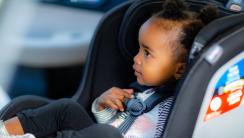
The goal of this study is to create a unique source of epidemiologic crash data that enables novel description of use and installation patterns of child restraints among crash-involved children and— following linkage with hospital discharge and death certificate data—novel description of child occupant injury outcomes based on restraint use and installation (rear- vs. forward-facing).2019-2020
- Belt Fit and Belt Torso Contact of Children on Belt-positioning Boosters
Principal Investigator: Randee Hunter, PhD
The goal of the study is to evaluate the newly proposed metrics of belt fit (namely, percent belt torso contact and gap characteristics) along with previously published methods using child volunteers on a variety of modern belt-positioning booster seats.- Evaluation of LATCH vs. Non-LATCH Installations for Boosters in Frontal Impacts
Principal Investigator: Julie Mansfield, PhD
The goal of this project is to collect dynamic sled data and computer simulation data to determine how booster occupants might benefit or not benefit from LATCH installations.- Implementation of Interactive CRS Education Station
Principal Investigator: Julie Mansfield, PhD
This project aims to refine the interactive CRS education system using information gathered during pilot testing and to deploy the system in a supervised public location.- Epidemiologic Investigation of Child Restraint Installation Position and Serious Injury among Children in Motor Vehicle Crashes
Principal Investigator: Rachel Myers, PhD
The goal of this study is to create a unique source of epidemiologic crash data that enables novel description of use and installation patterns of child restraints among crash-involved children and— following linkage with hospital discharge and death certificate data—novel description of child occupant injury outcomes based on restraint use and installation (rear- vs. forward-facing).- In-Depth Analysis of Crash Causation Factors Using SHRP2 (Multiple Year Project)
Principal Investigator: Thomas Seacrist, MBE
Utilizing data from the Strategic Highway Research Program 2 (SHRP2) Naturalistic Driving Study, this study will quantify the behavioral, environmental, and experiential factors contributing to rear-end striking crashes among teen, young adult, and older drivers. The long-term objective is to inform the development of driver-specific Advanced Driver Assistance Systems that account for the unique errors exhibited by these risky driving groups.- A Naturalistic Seating Study of Children in Booster Seats with the PIPER Human Body Model; Frontal and Oblique Impacts in the Vehicle Environment with SCAB and AEB
Principal Investigator: Jalaj Maheshwari, MS
The first goal of this study is to systematically evaluate the naturalistic seating position of the 6YO and 10YO using the PIPER human body model to understand their response (kinetics and kinematics) in frontal and frontal-oblique impacts. A second goal is to use real-world seating conditions, such as a vehicle model with the front seats, SCAB and AEB pulse using a combination of sled testing and computational modeling.- Bringing the Latest in Neuroimaging Technology to the Auto Industry: Developing a New Tool for Testing Man Machine Interfaces in Autonomous Driving
Principal Investigator: Elizabeth Walshe, PhD
This project aims to develop a new methodology for use by the auto industry in understanding driver traits and states in the context of Level 1-3 autonomous driving. An additional aim is to identify brain activity associated with simple and complex driving scenarios with and without warnings in young drivers.- ATD Responses in Rear-facing/Forward-facing Configurations in Frontal and Rear Impact Sled Tests
Principal Investigator: Declan Patton, PhD
This project aims to quantify the kinematics and kinetics of the Q6 and Q10 ATD installed in rear-facing/forward-facing configurations in frontal and rear impact sled testing.- Characteristics of Crashes Represented by the FMVSS 213 Crash Pulse
Principal Investigator: Valentina Graci, PhD
The goal of the proposed study is to understand the functional relationship between the kinematics and kinetics of the ATD, the acceleration of the vehicle/sled, and the resulting injury criteria and CRS structural performance.- Quantitative Characterization of AEB Pulses Across the Modern Fleet: Insights on the Relationship Between AEB Pulse Characteristics and Occupant Safety
Principal Investigator: Valentina Graci, PhD
The goal of the proposed study is to compare and characterize automatic emergency braking (AEB) pulses of different vehicles currently on the road in order to understand the type of loading environment to which vehicle occupants are being exposed and if there will be the need to have more specific common standards for AEB features.
2018-2019
- In-Depth Analysis of Crash Causation Factors Using SHRP2 (Multiple Year Project)
Principal Investigator: Thomas Seacrist, MBE
Utilizing data from the Strategic Highway Research Program 2 (SHRP2) Naturalistic Driving Study, this study will quantify the behavioral, environmental, and experiential factors contributing to rear-end striking crashes among teen, young adult, and older drivers. The long-term objective is to inform the development of driver-specific Advanced Driver Assistance Systems that account for the unique errors exhibited by these risky driving groups.- Biomechanics in Autonomous Vehicles: A Pilot Study to Explore Responses of Pediatric Occupants in Non-traditional Seating Conditions
Principal Investigator: Jalaj Maheshwari, MS
Autonomous vehicle seating designs have non-traditional seating positions, which potentially give rise to new impact conditions. Using computational modeling, this study explores the implications of non-normative seating conditions on booster seat-restrained pediatric occupants in simulated high-speed rear impacts.- Effectiveness of Boosters vs. Forward-facing Five-point Harness
Principal Investigator: Julie Mansfield, PhD
As the optimal time to transition a child from a forward-facing child restraint system to a booster is not currently clear, this study aims to help inform better guidelines for children during this transition. Statistical analyses will be conducted on cases in federally available databases and the mechanisms of injury in each type of seat will be analyzed to compile recommendations for industry interventions.- Effects of Adjacent Seat Positions on CRS Performance in Side Impacts
Principal Investigator: Julie Mansfield, PhD
Versatility in vehicle seating positions offer consumers the ability to adapt the vehicle environment to their family’s needs. However, it is currently not known how these various seat configurations and obstacles might interact with child restraint systems (CRS) in adjacent seats during side impacts. This study utilizes sled testing to define the performance outcomes of CRS in side impacts under specific seating configurations.- Understanding Child Restraint System Use on Airplanes
Principal Investigator: Aimee Palumbo, PhD, MPH
This study aims to identify strengths and critical gaps in flight attendant and parents’ knowledge and perceptions that lead to low child restraint system use for child airline passengers. Following surveys administered to both flight attendants and caregivers, analyses will estimate rates of CRS use and identify key themes and recommendations.- How Do Novel Seat Positions Impact Usability of Child Restraints?
Principal Investigator: Patrice Tremoulet, PhD
Autonomous driving technology offers manufacturers the opportunity to design vehicles with different interiors than traditional automobiles. It is important to consider the safety implications when contemplating different interior design possibilities, particularly for families with young children who will need to use child restraint systems. This study explores how having seats in non-traditional orientations within a vehicle may impact parents’…- Child Seats with Load Legs: Understanding the Response of the ATD in Mitigating Head Injury Risk Across Crash Directions
Principal Investigator: Aditya Belwadi, PhD
This study aims to quantify the response of the instrumented anthropomorphic test device (ATD) in rear-facing child seats with and without load legs in simulated frontal, oblique, and lateral impact crashes. The broad long-term objective of this line of research is to gain insight into ATD kinematics and kinetics as a function of the child seat.- Can the Startle Reflex be Manipulated to Reduce Take-over Time in Pre-crash Scenarios for Autonomous Driving?
Principal Investigator: Valentina Graci, PhD
This project examines if take-over reaction time to reach and turn the steering wheel during a simulated vehicle swerving is decreased by an acoustic startling pre-stimulus, i.e., a loud sound preceding the swerving event. Using a lateral oscillating sled device, two populations (adults vs. teens) will be studied and the role of driver awareness will be quantified by examining scenarios when the driver is ready to react and when the driver is involved…- Sensitivity Analysis on Factors that Influence Head Responses of Hybrid III 6-Year-Old ATD
Principal Investigator: Yun Seok Kang, PhD
This study aims to provide information that will allow child restraint system and vehicle engineers to understand the influence of neck cable tightness and repeated tests on responses of the Hybrid III 6-year-old anthropomorphic test device (ATD) head and neck in frontal impact scenarios, utilizing a controlled mini-sled system.
2017-2018
- An Analysis of the Interaction between Child Occupants and Deploying Frontal Passenger Air Bag - A Modern Examination
Principal Investigator: Aditya Belwadi, PhD
Historically, much attention has been devoted to the interaction between children and frontal passenger air bags. With the advancement of innovations in airbag design in the last decade, the aggressivity and deployment characteristics of passenger airbags have greatly changed. In addition, seatbelt technology in the front seat has been designed to work in conjunction with the airbag to further help position the occupant and manage the crash energy. This…