Roberts Center for Pediatric Research 2716 South Street, 13th Floor Philadelphia, PA 19146

Breadcrumb
RESEARCH PORTFOLIO
Principal Investigator: Rachel Myers, PhD
The goal of this study is to create a unique source of epidemiologic crash data that enables novel description of use and installation patterns of child restraints among crash-involved children and— following linkage with hospital discharge and death certificate data—novel description of child occupant injury outcomes based on restraint use and installation (rear- vs. forward-facing).2017-2018
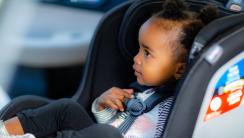
- Evaluation of Variability in Five-point Harness Tightening Procedures
Principal Investigator: Julie Mansfield, PhD
CRS sled testing efforts depend on the ability of the sled protocol to produce consistent results. Small variations in test benches, seat belt tensions, ATD calibrations, and harness tensions can affect the quality of test results. One important aspect of CRS testing which has not been extensively studied is the method by which the harness is tightened, and the process of verifying that consistent harness tensions are being used across trials. The long…- Evaluation of Variability in Five-point Harness Tightening Procedures
Principal Investigator: John H. Bolte IV, PhD
CRS sled testing efforts depend on the ability of the sled protocol to produce consistent results. Small variations in test benches, seat belt tensions, ATD calibrations, and harness tensions can affect the quality of test results. One important aspect of CRS testing which has not been extensively studied is the method by which the harness is tightened, and the process of verifying that consistent harness tensions are being used across trials. The…- Evaluation of CRS and Vehicle Features Associated with Improved Top Tether Attachment Rates
Principal Investigator: Julie Mansfield, PhD
Proper use of the top tether is associated with reduced head excursion and reduction of other injury metrics in forward-facing child restraint systems (FF CRS). Even imperfect top tether attachments can still provide some degree of protection to occupants. Unfortunately, the top tether is only attached in approximately 50% of FF CRS installations. Studies indicate that large percentages of caregivers do not realize that the top tether exists, and do…- Evaluation of CRS and Vehicle Features Associated with Improved Top Tether Attachment Rates
Principal Investigator: John H. Bolte IV, PhD
Proper use of the top tether is associated with reduced head excursion and reduction of other injury metrics in forward-facing child restraint systems (FF CRS). Even imperfect top tether attachments can still provide some degree of protection to occupants. Unfortunately, the top tether is only attached in approximately 50% of FF CRS installations. Studies indicate that large percentages of caregivers do not realize that the top tether exists, and do…- Evaluating the Efficacy of Belt Positioning Booster Seat Design (High-back, Low-back and Heightless Booster) in Nearside Impacts with and without Side Curtain Air Bags
Principal Investigator: Aditya Belwadi, PhD
Belt-positioning booster seats are recommended for children who use vehicle seat belts as primary restraints but who are too small to obtain good belt fit. The vast majority of previous research evaluating the protection afforded by booster seats has been conducted in frontal crash conditions. This study focuses on nearside impacts, a crash condition that has gained attention in child occupant protection. The project builds on previous CChIPS work and…- Emergency Autonomous to Manual Takeover in Driving Simulator: Teens vs. Adult Drivers
Principal Investigator: Helen Loeb, PhD
Semi-autonomous vehicles are emerging, with some in the auto industry targeting 2020 for autonomous cars. A high level of vehicle automation has great potential to improve safety by dramatically cutting the traffic fatality rate. The challenge, however, is to deploy these vehicles safely. While the general expectation is that the self-driving technology will bring us ever closer to the Vision Zero objective of no traffic fatalities, it is imperative to…- Ensuring Safety of Children in Self-driving Vehicles
Principal Investigator: Patrice Tremoulet, PhD
With the launch of Uber, Lyft and other mobile applications, many parents are now relying on Uber to shuttle their children across town to afterschool activities or other functions. The question about the proper age for a minor to be unaccompanied in a cab becomes more complicated with the recent launches of Uber self-driving cabs in Pittsburgh and in San Francisco. At which age can a child ride unaccompanied by an adult in a self-driving car? How do…- Vertical Vehicle Kinematics in Frontal Crashes – Implications for Rear Row Occupants
Principal Investigator: Matthew R. Maltese, PhD
During a frontal crash test, the vehicle experiences principally longitudinal deceleration, but also vertical kinematics that cause the rear of the vehicle to move upward or “pitch” forward. In the literature, research studies on vehicle vertical kinematics in frontal crash tests is sparse but spans decades. A 2016 a study showed that the additional vehicle body pitch to a planar sled test was essential to reproducing ATD injury metrics observed in…- Efficacy of Automatic Emergency Braking During SHRP2 Rear-end Crashes
Principal Investigator: Thomas Seacrist, MBE
Among motor vehicle crashes, rear-ends are the most common form of crash, particularly among novice teen drivers. Automatic Emergency Braking (AEB) has the potential to prevent or reduce the severity of these rear-end crashes. The SHRP2 Naturalistic Driving Study offers a unique opportunity to evaluate the potential efficacy of AEB on real-world crash scenarios. This project aims to recreate SHRP2 scenarios with the presence of AEB to determine if the…- Pediatric Response to Oblique Loading in Aircraft Seats with Standard and Inflatable Seat Belts
Principal Investigator: John H. Bolte IV, PhD
The Federal Aviation Administration (FAA) recommends that all children ride in a size-appropriate child restraint system (CRS) while onboard aircraft. As aircraft seating evolves to accommodate the safety and comfort needs of the adult population, all such changes should be evaluated to determine their impact on the pediatric population. Little data exists to ensure satisfactory performance of CRS in aircraft crashes. More data from dynamic crash…- Large Omnidirectional Child (LODC) ATD: Round Robin Testing
Principal Investigator: John H. Bolte IV, PhD
In 2011, the National Highway Traffic Safety Administration (NHTSA) initiated a research project to guide the development of a new pediatric ATD that would identify how to maintain the safety of children transitioning between belt-positioning boosters and standard vehicle restraints. The result of the 5-year project is the large omnidirectional child (LODC) ATD. While the LODC has undergone numerous biofidelity tests by Vehicle Research and Test…- Influence of CRS Fit on Far Side Impacts
Principal Investigator: Yun Seok Kang, PhD
Side impacts are the second most frequent type of collision and can cause serious injuries to pediatric occupants. While higher fatality rates have been reported for near-side impacts, serious non-fatal injuries have been reported for far-side impacts as well, where little or no vehicle intrusion was reported. The fit of the CRS, especially problems which produce gaps between the CRS and vehicle seat surfaces, could affect occupant and CRS responses in…
2016-2017
- Emergency Autonomous to Manual Takeover in Driving Simulator: Teens vs. Adult Drivers
Principal Investigator: Helen Loeb, PhD
Semi-autonomous vehicles are emerging, with some in the auto industry targeting 2020 for autonomous cars. A high level of vehicle automation has great potential to improve safety by dramatically cutting the traffic fatality rate. The challenge, however, is to deploy these vehicles safely. While the general expectation is that the self-driving technology will bring us ever closer to the Vision Zero objective of no traffic fatalities, it is imperative to…- Performance of Rear-facing CRS in Rear Impacts
Principal Investigator: Julie Mansfield, PhD
In frontal and oblique impacts, rear-facing (RF) CRS distribute crash forces throughout the occupant’s back and keep the head, neck, and spine safely aligned. However, in a rear impact, the overall kinematics of the crash are reversed and the five point harness becomes the primary loading surface for the occupant’s weight. The objective of this research is to investigate the response of RF CRS occupants in rear impacts, a currently under-addressed…- Pediatric Advanced Automatic Crash Notification (Multiple Year Project)
Principal Investigator: Joel Stitzel, PhD
This project’s goal is to create scoring systems to better classify motor vehicle crash-related injuries in children. A second goal is to use these scoring systems to develop a refined advanced automatic crash notification (AACN) algorithm and to evaluate its benefit to society. This algorithm is intended to serve as a part of a comprehensive trauma system to deliver children to appropriate treatment facilities. Year 4 of the project will further refine…- Maturation of Driving Skill from Teen to Young Adult to Experienced Adult using SHRP2 Naturalistic Data
Principal Investigator: Thomas Seacrist, MBE
Young adult drivers should exhibit improved driving behavior compared to teen drivers due to increased driving experience. However, previous naturalistic driving data suggests otherwise. This study will identify the specific predictors of crashes and near crashes among young drivers and determine if these predictors vary across age and skill level. The specific aims are to 1) categorize and quantify the factors contributing to young adult crashes and…- Usability of Non-standard Lower Anchor Spacing for CRS Installations
Principal Investigator: Julie Mansfield, PhD
Vehicle manufacturers are under increased pressure from the National Highway Traffic Safety Administration (NHTSA) and the Insurance Institute for Highway Safety (IIHS) to provide the option of using LATCH in the rear center position of vehicles. One possible solution to this request is to allow consumers to “borrow” the inboard lower anchor from each outboard LATCH position to create a “simulated” center LATCH position. However, these borrowed lower…- Active Safety Technology and Teen Drivers: Impressions, Perceived Need, and Intervention Preferences
Principal Investigator: Thomas Seacrist, MBE
Recently developed advanced driver assistance systems (ADAS) have the potential to compensate for skill deficits and reduce overall crash risk. Yet, ADAS is only effective if drivers are willing to use it. Limited research has been conducted on the suitability of ADAS for teen drivers. The goal of this study is to use qualitative research methodology identify teen drivers' perceived need for ADAS, receptiveness to in-vehicle technology, and…- Usability of Non-standard Lower Anchor Spacing for CRS Installations
Principal Investigator: John H. Bolte IV, PhD
Vehicle manufacturers are under increased pressure from the National Highway Traffic Safety Administration (NHTSA) and the Insurance Institute for Highway Safety (IIHS) to provide the option of using LATCH in the rear center position of vehicles. One possible solution to this request is to allow consumers to “borrow” the inboard lower anchor from each outboard LATCH position to create a “simulated” center LATCH position. However, these borrowed lower…
2013-2014
- Pediatric Advanced Automatic Crash Notification (Multiple Year Project)
Principal Investigator: Ashley Weaver, PhD
This project’s goal is to create scoring systems to better classify motor vehicle crash-related injuries in children. A second goal is to use these scoring systems to develop a refined advanced automatic crash notification (AACN) algorithm and to evaluate its benefit to society. This algorithm is intended to serve as a part of a comprehensive trauma system to deliver children to appropriate treatment facilities. Year 4 of the project will further refine…