Roberts Center for Pediatric Research 2716 South Street, 13th Floor Philadelphia, PA 19146

Breadcrumb
RESEARCH PORTFOLIO
Principal Investigator: Rachel Myers, PhD
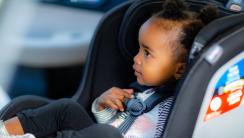
The goal of this study is to create a unique source of epidemiologic crash data that enables novel description of use and installation patterns of child restraints among crash-involved children and— following linkage with hospital discharge and death certificate data—novel description of child occupant injury outcomes based on restraint use and installation (rear- vs. forward-facing).2013-2014
- Pediatric Advanced Automatic Crash Notification (Multiple Year Project)
Principal Investigator: Ashley Weaver, PhD
This project’s goal is to create scoring systems to better classify motor vehicle crash-related injuries in children. A second goal is to use these scoring systems to develop a refined advanced automatic crash notification (AACN) algorithm and to evaluate its benefit to society. This algorithm is intended to serve as a part of a comprehensive trauma system to deliver children to appropriate treatment facilities. Year 4 of the project will further refine…- Pediatric Advanced Automatic Crash Notification (Multiple Year Project)
Principal Investigator: Joel Stitzel, PhD
This project’s goal is to create scoring systems to better classify motor vehicle crash-related injuries in children. A second goal is to use these scoring systems to develop a refined advanced automatic crash notification (AACN) algorithm and to evaluate its benefit to society. This algorithm is intended to serve as a part of a comprehensive trauma system to deliver children to appropriate treatment facilities. Year 4 of the project will further refine…- Pediatric Brain Injury Assessment in Real World Crashes (Multiple Year Project)
Principal Investigator: Matthew R. Maltese, PhD
Traumatic Brain Injury (TBI) is the leading pediatric injury in motor vehicle crashes, and an ever-expanding array of safety systems are being developed that have the potential to mitigate TBI. Human body computer models are under development and have the potential to guide the development of such safety systems, but pediatric human body models are limited. In this project, investigators are developing a family of pediatric finite element (FE) brain…
2016-2017
- Active Safety Technology and Teen Drivers: Impressions, Perceived Need, and Intervention Preferences
Principal Investigator: Thomas Seacrist, MBE
Recently developed advanced driver assistance systems (ADAS) have the potential to compensate for skill deficits and reduce overall crash risk. Yet, ADAS is only effective if drivers are willing to use it. Limited research has been conducted on the suitability of ADAS for teen drivers. The goal of this study is to use qualitative research methodology identify teen drivers' perceived need for ADAS, receptiveness to in-vehicle technology, and…- Usability of Non-standard Lower Anchor Spacing for CRS Installations
Principal Investigator: John H. Bolte IV, PhD
Vehicle manufacturers are under increased pressure from the National Highway Traffic Safety Administration (NHTSA) and the Insurance Institute for Highway Safety (IIHS) to provide the option of using LATCH in the rear center position of vehicles. One possible solution to this request is to allow consumers to “borrow” the inboard lower anchor from each outboard LATCH position to create a “simulated” center LATCH position. However, these borrowed lower…- Survey of Car Seat Usage, Knowledge, and Attitudes
Principal Investigator: John H. Bolte IV, PhD
Despite the careful development of best practice recommendations from the child passenger safety community, high rates of child restraint system misuse exist today. This study will identify topics of greatest concern to consumers by opening the lines of communication between consumers, industry, and researchers. Specifically, the study will gauge current caregiver attitudes regarding car seat usage; identify the reasoning behind parental car seat…- ATD Lower Extremity Interaction with the Front Seat Back during Sled Tests
Principal Investigator: Laura Boucher, PhD
Over the past five years a series of CChIPS-funded projects have focused on developing a more biofidelic Hybrid III 6 year-old ATD lower extremity. The broad objective of this research is to expand the understanding on how ATD legs are interacting with the front seat back and/or vehicle interior. This project will provide important evidence that the use of a front seat back during sled testing provides an important realistic environment for more adequate…- Lateral Cervical Spine Stiffness in Children
Principal Investigator: Laura Boucher, PhD
Side impact crashes have become a major point of focus in the child passenger safety field due to the high injury and fatality rates associated with this type of crash. As new side impact testing standards are developed, the biofidelity of anthropomorphic test devices (ATDs) and human body models (HBMs) in the lateral direction becomes increasingly vital. The long-term objective is to provide data that are not currently available to those who are using…- Lear First Year Project: The roles of Vehicle Seat Cushion Stiffness and Length in CRS Performance
Principal Investigator: Yun Seok Kang, PhD
Due to the wide variety of rear seat occupant sizes, optimization of seat parameters is complex. Recent work supports the adoption of shorter seat cushion lengths to better accommodate the adolescent and small adult population. However, shorter seat cushion lengths may be detrimental to the youngest rear row occupants who ride in CRS with large base footprints. This study aims to investigate whether seat cushion length plays a role in CRS performance and…- Evaluation of Side Impacts with a Frontal Component for Children in Child Restraint Systems (Multiple Year Project)
Principal Investigator: Kristy Arbogast, PhD
This project quantifies kinematics and injury metrics for 3 year old anthropomorphic test device (ATD) in oblique side impacts with a focus on assessing the potential for head injury, thus fueling understanding of head injury mechanisms for rear, center-seated occupants. This project, with its focus on an understudied area, will assess the need to prioritize future research and development efforts for car restraint system (CRS) manufacturers in the…- Driving Analytics: Comparison of Teen and Adult Naturalistic Car-following Patterns (Multiple Year Project)
Principal Investigator: Helen Loeb, PhD
This study will lead to a better understanding of the adult and teen driver behaviors which lead to crashes, as well as their specific reactions (such as swerving or braking) in emergency situations. The broad long term objective of this study is to quantify the human errors that lead to crashes and assess the potential impact of new active safety systems, such as Forward Collision Warning or Lane Deviation Warning, on driving safety. The study will use…- Evaluating the Efficacy of Belt Positioning Booster Seat Design (High-back, Low-back and Height-less booster) in Frontal and Far Side Oblique Impacts
Principal Investigator: Aditya Belwadi, PhD
Principal Investigator: Aditya Belwadi, PhD, The Children’s Hospital of Philadelphia
- Fidelity of the Upgraded FMVSS 213 Bench
Principal Investigator: Matthew R. Maltese, PhD
In March of 2015, NHTSA released the drawing package and specifications of a revised Federal Motor Vehicle Safety Standards (FMVSS) 213 Bench (213R) that will be intended for use in regulatory sled tests. This study aims to characterize the fidelity of the 213R Bench as a system, as compared to real vehicle seats. Researchers will also characterize the current FMVSS 213 Bench, to assess any change in fidelity that would result if the current bench…
2014-2015
- Pediatric Advanced Automatic Crash Notification (Multiple Year Project)
Principal Investigator: Ashley Weaver, PhD
This project’s goal is to create scoring systems to better classify motor vehicle crash-related injuries in children. A second goal is to use these scoring systems to develop a refined advanced automatic crash notification (AACN) algorithm and to evaluate its benefit to society. This algorithm is intended to serve as a part of a comprehensive trauma system to deliver children to appropriate treatment facilities. Year 4 of the project will further refine…- Pediatric Advanced Automatic Crash Notification (Multiple Year Project)
Principal Investigator: Joel Stitzel, PhD
This project’s goal is to create scoring systems to better classify motor vehicle crash-related injuries in children. A second goal is to use these scoring systems to develop a refined advanced automatic crash notification (AACN) algorithm and to evaluate its benefit to society. This algorithm is intended to serve as a part of a comprehensive trauma system to deliver children to appropriate treatment facilities. Year 4 of the project will further refine…- Evaluation of Side Impacts with a Frontal Component for Children in Child Restraint Systems (Multiple Year Project)
Principal Investigator: Kristy Arbogast, PhD
This project quantifies kinematics and injury metrics for 3 year old anthropomorphic test device (ATD) in oblique side impacts with a focus on assessing the potential for head injury, thus fueling understanding of head injury mechanisms for rear, center-seated occupants. This project, with its focus on an understudied area, will assess the need to prioritize future research and development efforts for car restraint system (CRS) manufacturers in the…
2015-2016
- Pediatric Advanced Automatic Crash Notification (Multiple Year Project)
Principal Investigator: Ashley Weaver, PhD
This project’s goal is to create scoring systems to better classify motor vehicle crash-related injuries in children. A second goal is to use these scoring systems to develop a refined advanced automatic crash notification (AACN) algorithm and to evaluate its benefit to society. This algorithm is intended to serve as a part of a comprehensive trauma system to deliver children to appropriate treatment facilities. Year 4 of the project will further refine…- Pediatric Advanced Automatic Crash Notification (Multiple Year Project)
Principal Investigator: Joel Stitzel, PhD
This project’s goal is to create scoring systems to better classify motor vehicle crash-related injuries in children. A second goal is to use these scoring systems to develop a refined advanced automatic crash notification (AACN) algorithm and to evaluate its benefit to society. This algorithm is intended to serve as a part of a comprehensive trauma system to deliver children to appropriate treatment facilities. Year 4 of the project will further refine…- Evaluation of Side Impacts with a Frontal Component for Children in Child Restraint Systems (Multiple Year Project)
Principal Investigator: Kristy Arbogast, PhD
This project quantifies kinematics and injury metrics for 3 year old anthropomorphic test device (ATD) in oblique side impacts with a focus on assessing the potential for head injury, thus fueling understanding of head injury mechanisms for rear, center-seated occupants. This project, with its focus on an understudied area, will assess the need to prioritize future research and development efforts for car restraint system (CRS) manufacturers in the…- Driving Analytics: Comparison of Teen and Adult Naturalistic Car-following Patterns (Multiple Year Project)
Principal Investigator: Helen Loeb, PhD
This study will lead to a better understanding of the adult and teen driver behaviors which lead to crashes, as well as their specific reactions (such as swerving or braking) in emergency situations. The broad long term objective of this study is to quantify the human errors that lead to crashes and assess the potential impact of new active safety systems, such as Forward Collision Warning or Lane Deviation Warning, on driving safety. The study will use…